Institutional terminology
Why we use the name ayahuasca
Ayahuasca is the term used in the Sanctuary’s documents and in Brazil’s Resolution CONAD No. 1/2010. Other names help us understand the different histories, territories and religions connected to the medicine.
These words do not always mean exactly the same thing. A name may belong to a particular people, language, preparation, lineage, prayer or religious community.
Amazonian and Andean contexts
Caapi, yagé, nixi pae and uni
Caapi or kaapi may refer to the Banisteriopsis caapi vine or to a drink prepared with it, depending on the context. Yagé or yajé is especially associated with Indigenous and mestizo contexts in northwestern Amazonia, including areas of Colombia and Ecuador.
Nixi pae and uni are names found in Huni Kuin contexts. Their meanings belong to living cultures and should not be separated from the people, territories and ways of teaching that keep them alive.
Brazilian religious traditions
Daime, hoasca and vegetal
Daime is the sacramental name established in traditions that developed from the life and teachings of Mestre Raimundo Irineu Serra. Hoasca, oasca and uasca are phonetic or written forms related to ayahuasca, while vegetal is used within specific Brazilian religious vocabularies.
Santuário Céu de Aparecida is not formally affiliated with Santo Daime, União do Vegetal or another ayahuasca religion. It maintains its own ritual formation while respecting the historical and religious importance of these traditions.
Direct experience and limits
Encounters with Huni Kuin people
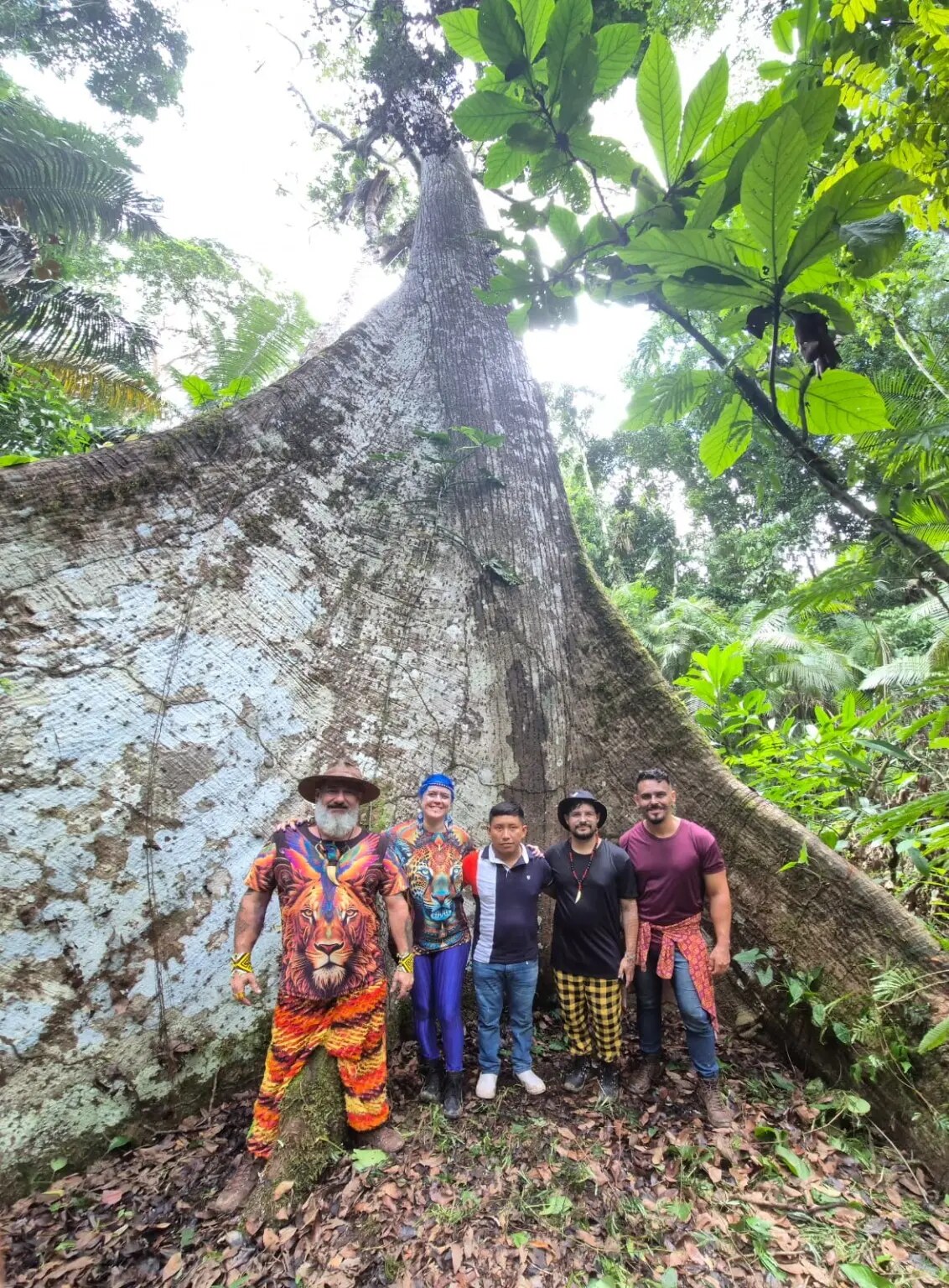
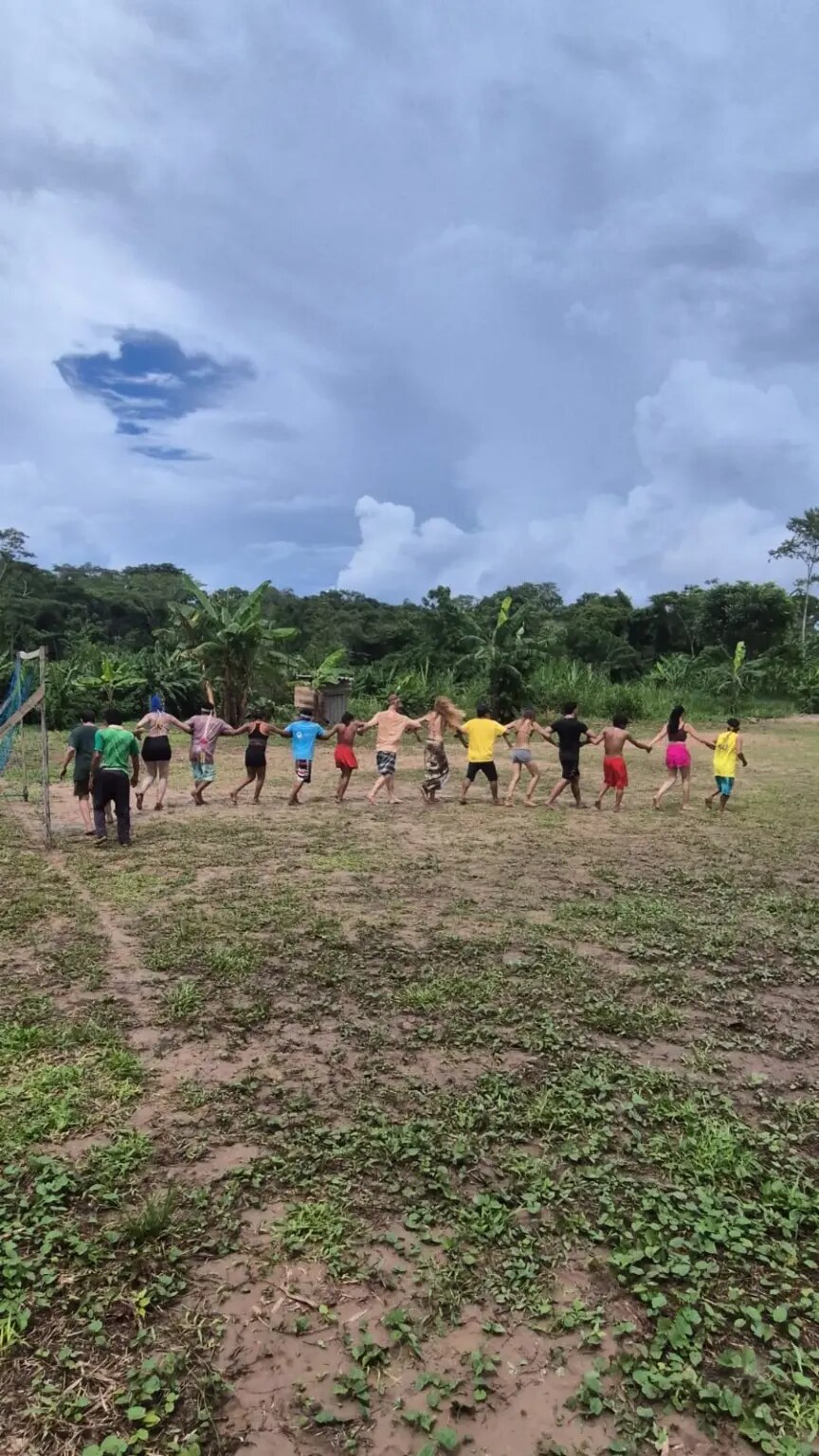
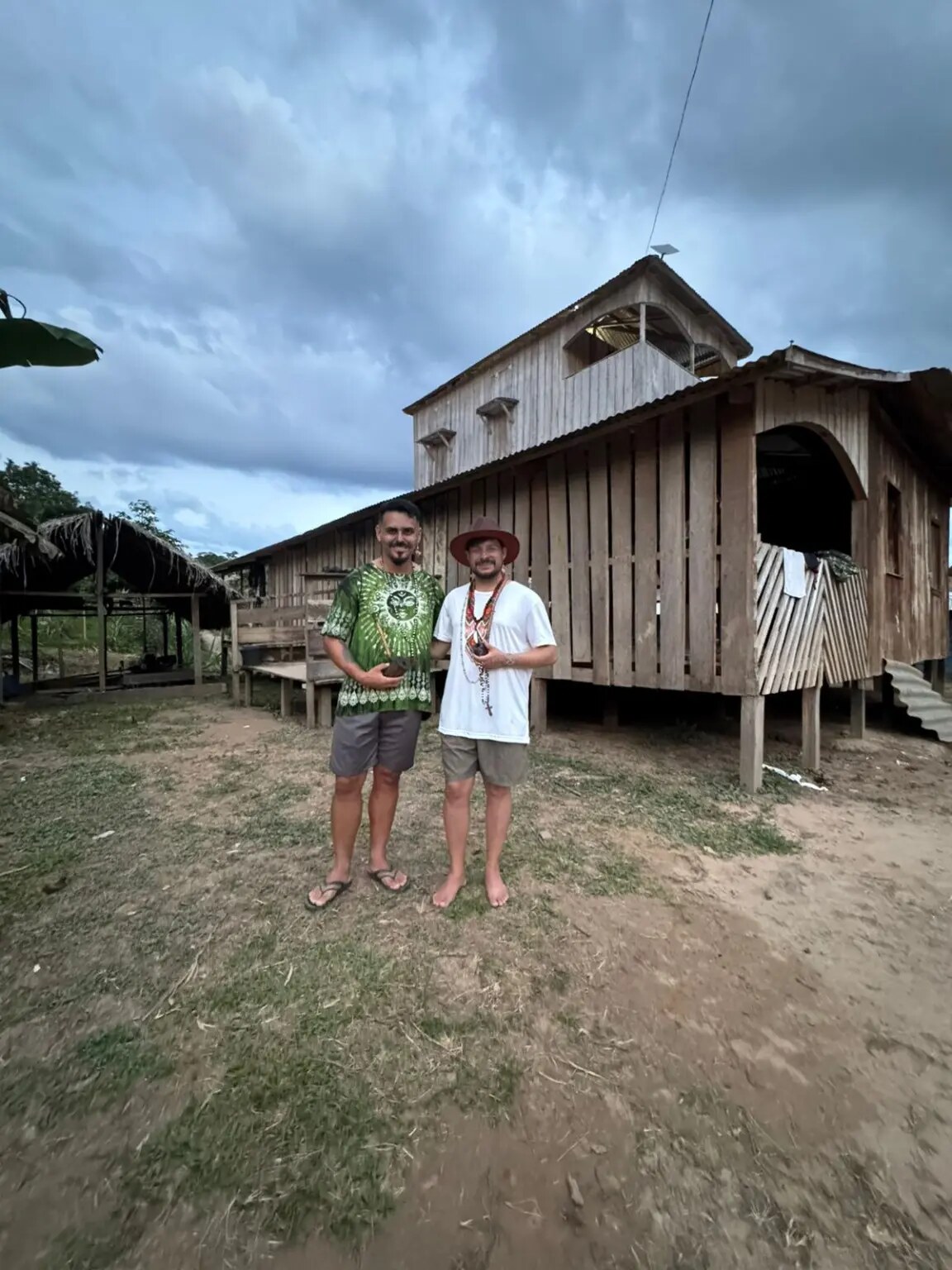
Between late 2024 and early 2025, directors Bruno Luz and Michael Pereira were received at Aldeia Chico Curumim, in the Kaxinawá Indigenous Territory of the Jordão River, Acre, near the Peruvian border. They took part in a community experience and a Huni Kuin baptism alongside young people from the village, following local guidance.
The experience has personal and spiritual meaning for the directors. It does not make the Sanctuary part of a Huni Kuin lineage, allow it to represent the people or give permission to reproduce their rites.
Cultural attribution
Listening without claiming representation
The Sanctuary recognizes Indigenous authorship and names people, communities and contexts as accurately as possible. We share encounters and authorized records as part of our history, never as proof of authority over another people’s knowledge.
Our universalist ritual practice is our own. Respect also means being honest about what we have learned and about what the Sanctuary has no right to claim or reproduce.
Essential information
What does Nixi Pae mean?
Nixi pae is a name found in Huni Kuin contexts and is often translated into English as ‘strong drink’. A short translation cannot contain its full cultural, linguistic and spiritual meaning. The Sanctuary uses the term only with attribution and does not claim to represent the Huni Kuin people.
Are there different types of ayahuasca, or different names and traditions?
People often search for ‘types of ayahuasca’, but names such as ayahuasca, yagé, daime, nixi pae, uni and vegetal do not describe one simple classification. They may involve different preparations, languages, territories and religious or Indigenous traditions. Banisteriopsis caapi is a recurring botanical reference, but the cultural context of each name must be preserved.
Are ayahuasca, daime, yagé, nixi pae and uni exactly the same?
The terms may describe related preparations involving Banisteriopsis caapi, but they belong to distinct cultural, territorial and religious contexts. Context must be preserved.
Which name does the Sanctuary use?
The Sanctuary institutionally uses ayahuasca. Other names appear for educational purposes and cultural recognition.
Are iowaska, yaguasca and similar spellings different medicines?
Forms such as iowaska, yaguasca, huasca and other phonetic spellings are commonly used when people are trying to write ayahuasca from sound. A spelling alone does not identify a separate preparation or tradition. The relevant plant, preparation and cultural or religious context must always be considered.
Does the Sanctuary represent the Huni Kuin people?
No. Personal and institutional encounters do not create representation, lineage or authority to speak on behalf of the Huni Kuin people.
Institutional content prepared by Santuário Céu de Aparecida and reviewed by Michael Luis Miguel Pereira e Bruno Lucas de Paula Luz · Updated September 1, 2026.
Sources and limits of this content
Sources
- Brazilian National Council on Drug Policy — Resolution No. 1/2010
- ICEERS — What is the difference between ayahuasca, yagé and daime?
- IPHAN — Huni Meka: Chants of Nixi Pae
- Authorized records and institutional account by directors Bruno Luz and Michael Pereira