Before contacting us
Why this page exists
A responsible decision begins with reliable information. These answers explain how the Sanctuary generally works, but they do not replace individual screening, an interview or guidance from a qualified health professional.
The Sanctuary does not recruit followers, encourage autonomous use of forest medicines, diagnose conditions or promise healing or any specific outcome.
Essential information
Is Santuário Céu de Aparecida a shamanic institute?
Some people may describe work like ours as a shamanic institute. Céu de Aparecida, however, is a nonprofit religious organization devoted to universalist shamanism in Matão, São Paulo, Brazil.
What is universalist shamanism?
For us, it is a spiritual path that welcomes dialogue among different beliefs and religious expressions. It is guided by respect for Indigenous traditions, free will, diversity and each person’s own experience.
Does the Sanctuary welcome diversity?
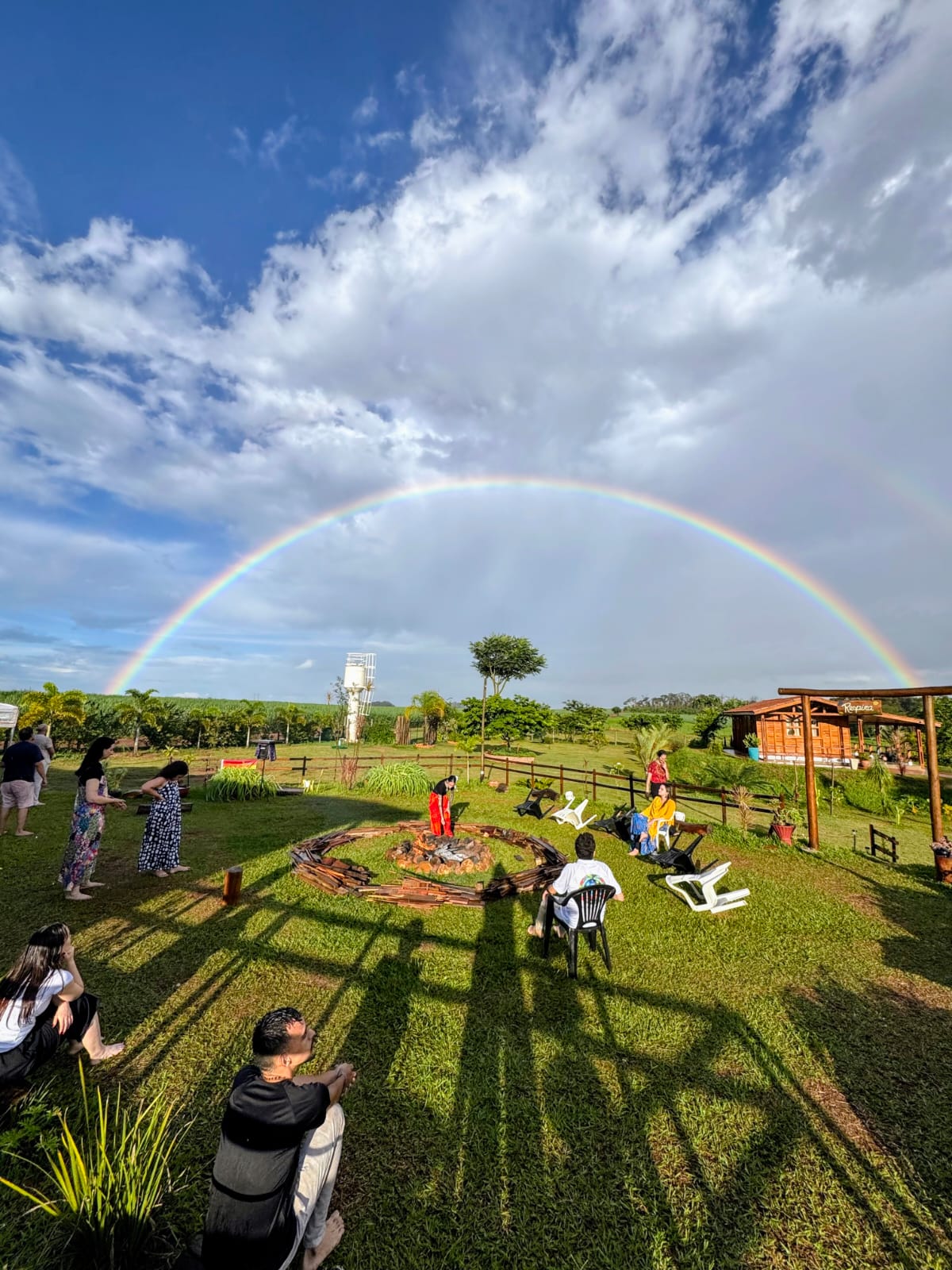
Yes. People of different origins, beliefs, gender identities, sexual orientations and ways of being are welcomed with equal dignity and respect. The rainbow present in the Sanctuary also symbolizes diversity: distinct colors forming a shared whole. Screening and safety procedures apply to everyone without discrimination.
Does the Sanctuary hold ayahuasca ceremonies?
Yes. Ayahuasca is used exclusively in a religious and ritual context, never recreationally, and only after the Sanctuary’s applicable health questionnaire, interview and preparation procedures.
Which forest medicines may be present?
Depending on the purpose of each ceremony and the individual assessment, the ritual may include ayahuasca, rapé, sananga, ceremonial cacao and ceremonial tobacco used in a pipe. Rapé, sananga, cacao and tobacco are optional and all medicines remain restricted to the sacred context.
Are all forest medicines optional?
Rapé, sananga, cacao and ceremonial tobacco are always optional. In specific ceremonies, ayahuasca is the central sacrament—described by the Sanctuary as the master medicine—and its use forms part of the religious framework for participants who completed screening. Each approved participant freely chooses the amount, from a symbolic portion up to the limit defined for that ceremony.
What effects may occur?
Effects vary according to the person, medicine, amount and context. Ayahuasca may alter perception, emotions and the experience of time and may also cause nausea, vomiting, bodily changes, anxiety or temporary disorientation. Rapé may cause nasal burning, tearing, salivation, dizziness and nausea. Sananga causes intense temporary eye burning, tearing, redness and possible temporary blurred vision. Cacao may cause warmth, stimulation or digestive discomfort. Tobacco and smoke also involve risks, including irritation, discomfort and nicotine exposure, even when the smoke is not inhaled.
What are the main contraindications?
Assessment is individual and this is not a complete list. Pregnancy or breastfeeding, significant or uncontrolled cardiovascular conditions, a personal history of psychosis or mania, acute emotional destabilization, epilepsy or seizures, allergies and certain medications or substances may prevent participation or require professional assessment. Eye disease, injury, infection or recent eye surgery require specific attention before sananga. Every health condition and medication must be disclosed. The Sanctuary never advises anyone to stop medication or treatment.
Does previous experience replace the interview?
No. Everyone attending the Sanctuary for the first time follows the initial procedures, regardless of prior experience, religious role or participation in other institutions.
Does the interview guarantee admission?
No. It is a process of listening, clarification and assessment. Confirmation depends on the information provided, safety criteria, available capacity and a responsible decision by the leadership team.
How are ceremonies announced?
Ceremonies are announced in the Sanctuary’s permanent community group. When registration opens, a temporary group is created for that specific ceremony. Only people included in that group who completed the applicable screening and preparation procedures may attend.
Is there a financial contribution?
The Sanctuary suggests a contribution to help cover ceremony costs and care for the space. It is never a payment for medicine or a guarantee of participation. The leadership team shares the suggested amount. If someone cannot contribute that amount, the team may consider a smaller contribution, a material donation, help with maintenance, or a reduced-contribution or sponsored place, depending on the circumstances of each ceremony.
Is preparation required before a ceremony?
Yes. The temporary group receives guidance for that particular ceremony. This usually includes lighter food, no alcohol or other consciousness-altering substances, attention to emotional well-being and respect for the religious purpose. Medication and treatment must never be discontinued without professional guidance.
How long does a ceremony last?
Open ceremonies last approximately four and a half hours. Reserved ceremonies may last about two and a half to five hours, according to their theme, ritual purpose and organization. Exact times are shared in the temporary group.
What should I bring?
Final instructions are sent for each ceremony. Common recommendations include a sleeping mat, blanket, warm clothing, water bottle, insect repellent, sunscreen, a change of clothes, toilet paper for communal use and non-alcoholic food or drink to share afterward. Ritual objects should be brought only when the ceremony’s guidance expressly allows them.
What should I wear?
Choose light, comfortable clothing that respects the spiritual setting, preferably trousers or a skirt. Shorts are not recommended. Because the temple includes open areas, bring warm clothing, a blanket and a change of clothes.
Is food shared after the ceremony?
Yes. There is a gathering after the ceremony, and participants may bring food, juice or another non-alcoholic drink to share. Specific instructions are confirmed in the temporary group.
May I bring another medicine or preparation?
Not without express authorization. Only medicines planned and provided or authorized by the Sanctuary may be used. Any relevant substance, supplement or preparation must be disclosed in advance.
May I stop medication in order to participate?
The Sanctuary does not advise discontinuing medication or treatment. Questions about health, interactions or an individual condition must be discussed with the responsible health professional and disclosed honestly during screening.
Is support available during and after the ceremony?
Yes. Directors and guardians accompany the ceremony. Afterward, listening and integration support may be available and psychologists associated with the Sanctuary may provide guidance within professional boundaries when appropriate.
Does the Sanctuary offer treatment or healing?
No. The Sanctuary performs religious and spiritual activities. It does not promise healing, diagnose conditions or replace medical, psychological or other professional care.
Are reserved ceremonies available for pre-arranged groups?
Yes, the Sanctuary may consider requests from pre-arranged groups for reserved dates. The format depends on the religious purpose, our calendar, the space available and safety needs. Health questionnaires and interviews remain mandatory.
Where is Santuário Céu de Aparecida?
The temple is on Rodovia Washington Luiz, km 314, Chácara Nossa Senhora Aparecida, rural area of Matão, São Paulo, Brazil, postal code 15996-800. Visits and participation require prior guidance through the official channels.
Institutional content prepared by Santuário Céu de Aparecida and reviewed by Michael Luis Miguel Pereira e Bruno Lucas de Paula Luz · Updated September 1, 2026.
Sources and limits of this content
Sources
- Brazilian National Council on Drug Policy — Resolution No. 1/2010
- Global Ayahuasca Survey — adverse effects, context and integration
- Registered bylaws of Organização Céu de Aparecida
- Internal regulations, activity reports and institutional guidelines of the Sanctuary