Informed decision
It begins with the first conversation
In the first conversation, we explain the religious purpose, the medicines that may be present, possible effects, the care involved and the limits of our work. First-time participants must complete the screening form and join an interview.
Experience in another tradition or organization does not replace this process. Each temple works in its own way and needs to understand important individual information before confirming participation.
Preparation
Specific guidance for each gathering
Once participation is confirmed, attendees join a temporary ceremony group. We use it to share schedules, observances, food and clothing guidance, items to bring and other instructions for that gathering.
Medication or treatment must never be stopped without professional guidance. Questions about a health condition, medication or possible interaction should be discussed with the responsible health professional and shared clearly with the Sanctuary.
During the ceremony
Limited attendance, guardians and a prepared setting
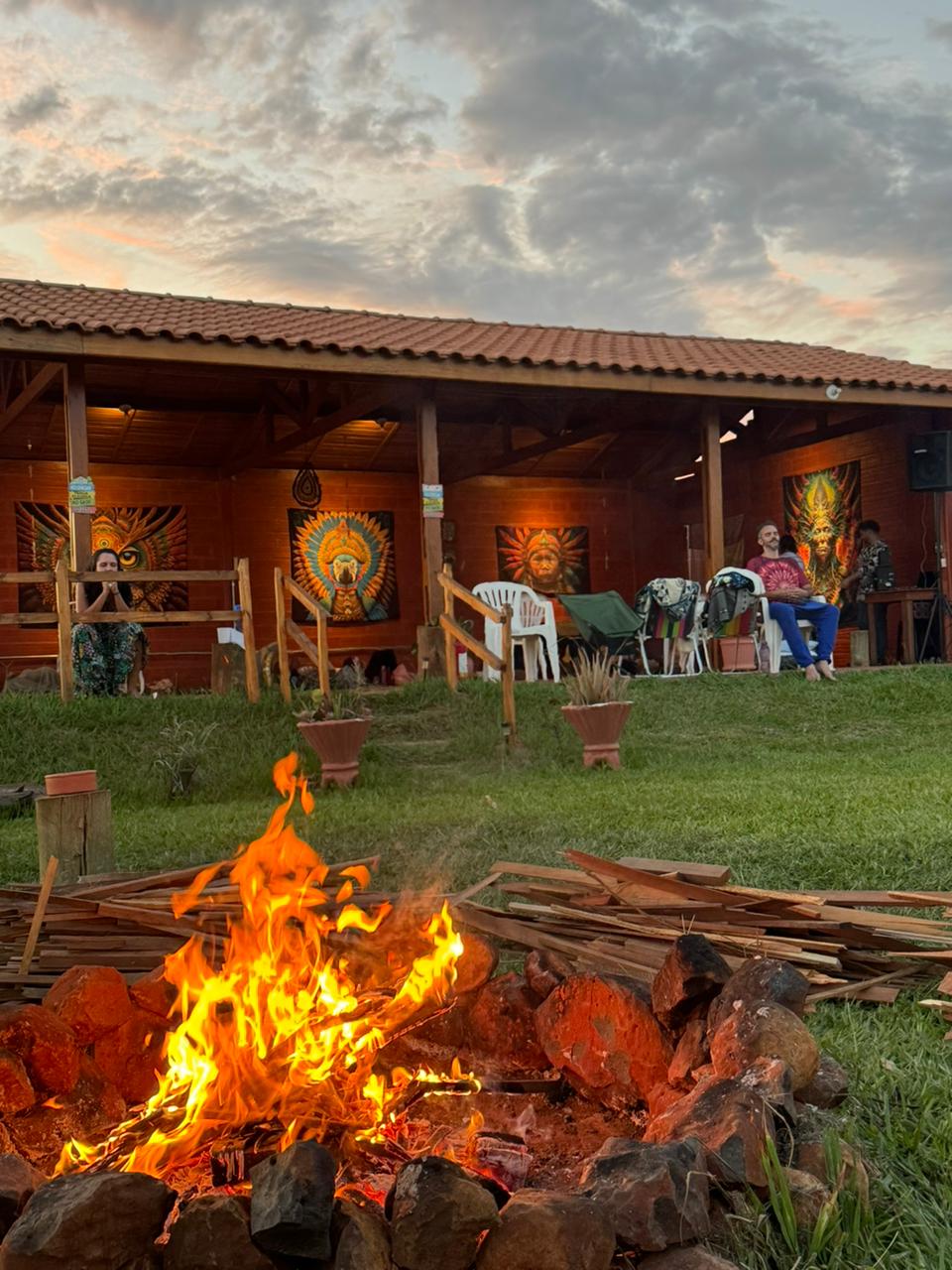
Attendance is limited so the team can stay organized and support the group with care. Directors and guardians look after the setting, movement, fire and the needs that arise throughout the ritual.
The team offers guidance and support without taking over or interpreting anyone’s experience. Listening, care with words and respect for free will guide this service.
Free choice
How sacramental medicines are approached
Rapé, sananga, cacao and ceremonial tobacco are optional. In specific ceremonies where ayahuasca is the central sacrament—described by the Sanctuary as the master medicine—its use forms part of the religious framework for participants who have completed screening and been considered eligible.
In those gatherings, each participant freely chooses their portion of ayahuasca, from a symbolic amount up to the limit established for that ceremony. No one is required to receive every medicine that may be available.
Ritual practice
Music, silence and speech are not isolated elements
Each ceremony has its own theme and path. Medicine music, ceremonial songs, prayers, instruments, silence, the setting and our presence all belong to the same work.
The ritual helps the group move together without telling anyone what their personal experience must mean.
Afterwards
The closing of the ritual does not mean abandonment
After the ceremony, there is time to be together and share food according to the guidance for that gathering. Participants may also contact the leadership team with questions or to talk about a particularly intense experience.
When appropriate, psychologists connected to the Sanctuary may offer initial listening and guidance within professional limits. The experience is not turned into a diagnosis, and this support does not replace ongoing care.
Religious nature
Religious, recreational and therapeutic purposes are different
Religious
Brings together ritual, spiritual purpose, community, guidance, responsibilities and the rules of a religious organization.
Recreational
Seeks entertainment or consumption outside a sacred context. This purpose is not accepted at the Sanctuary.
Therapeutic
Involves treatment aims and specific professional responsibilities. Sanctuary ceremonies are not offered as therapy.
Institutional content prepared by Santuário Céu de Aparecida and reviewed by Michael Luis Miguel Pereira e Bruno Lucas de Paula Luz · Updated September 1, 2026.
Sources and limits of this content
Sources
- Brazilian CONAD Resolution No. 1 of January 25, 2010
- ICEERS: Ayahuasca basic information
- Registered bylaws of Organização Céu de Aparecida
- Internal rules, activity reports and institutional guidelines of the Sanctuary