Aldeia Chico Curumim
A direct experience in Aldeia Chico Curumim
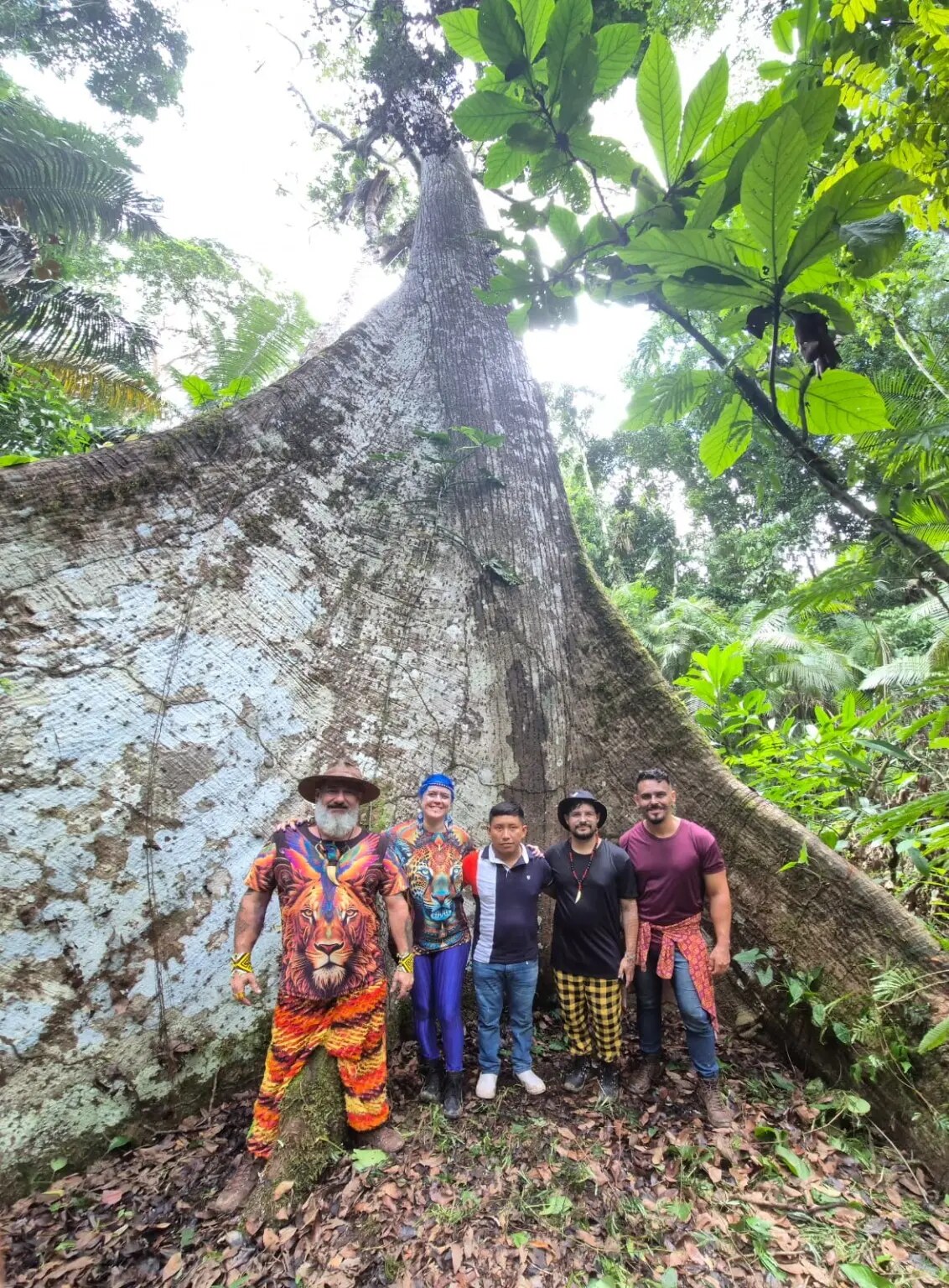
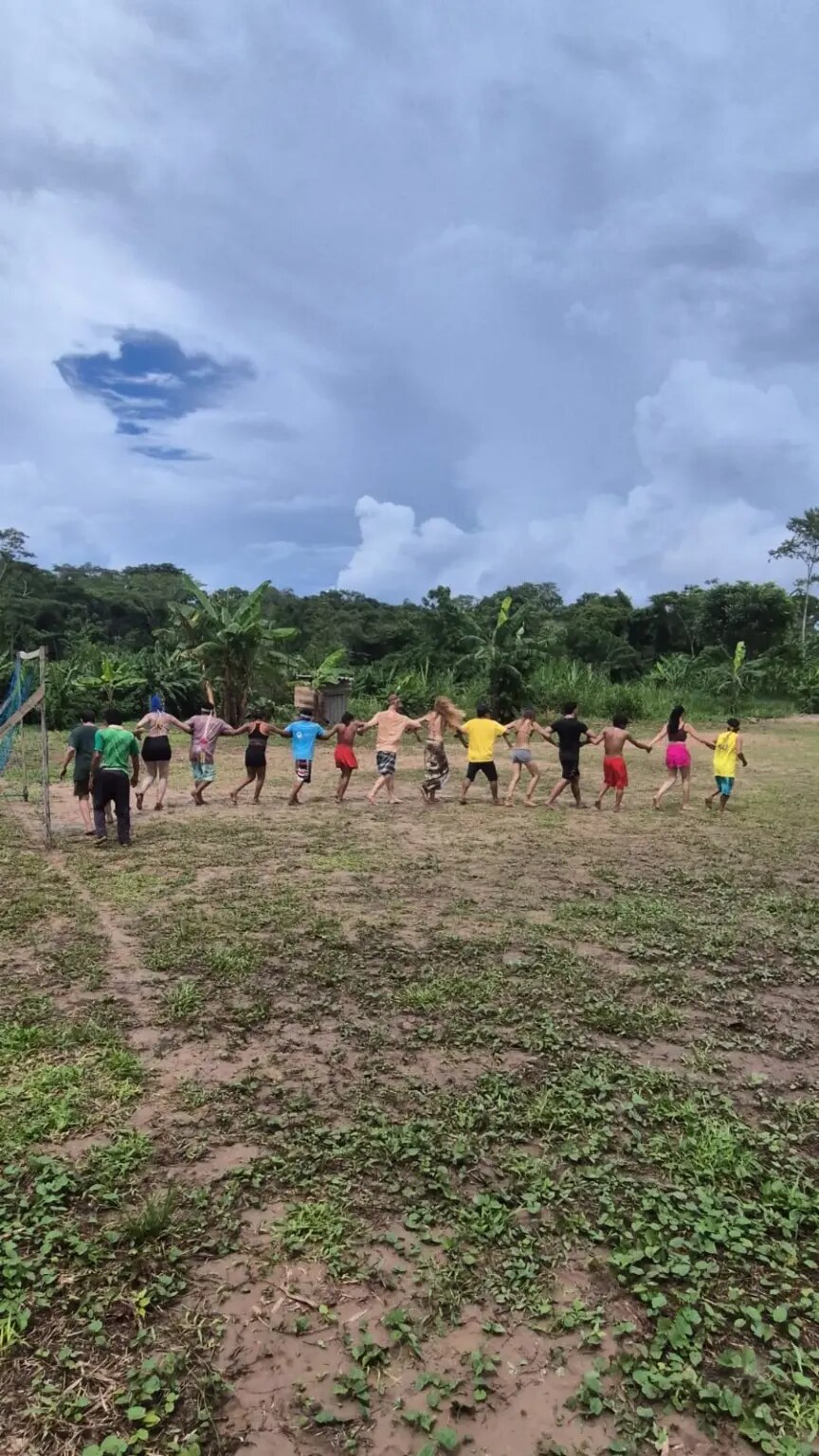
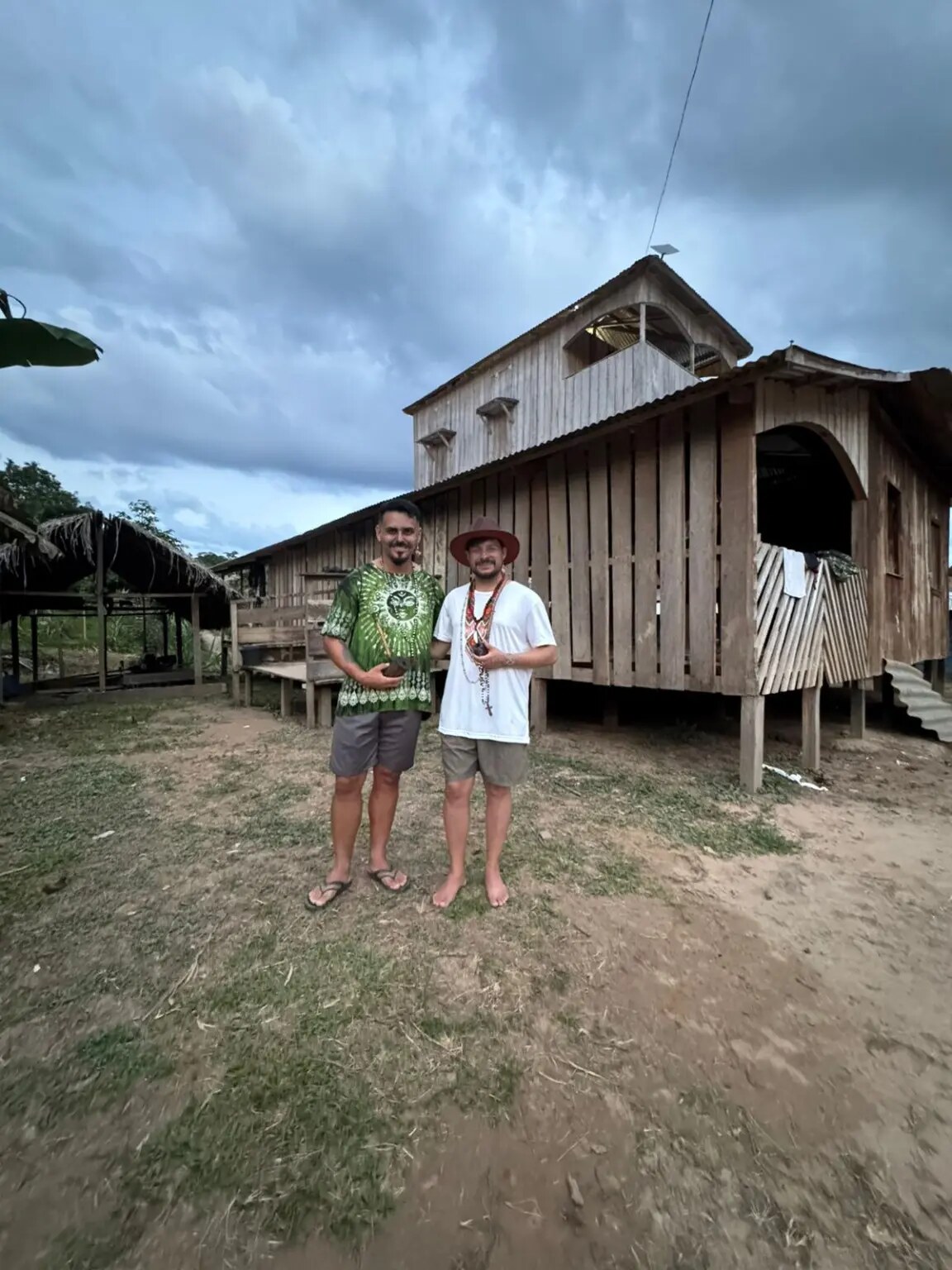
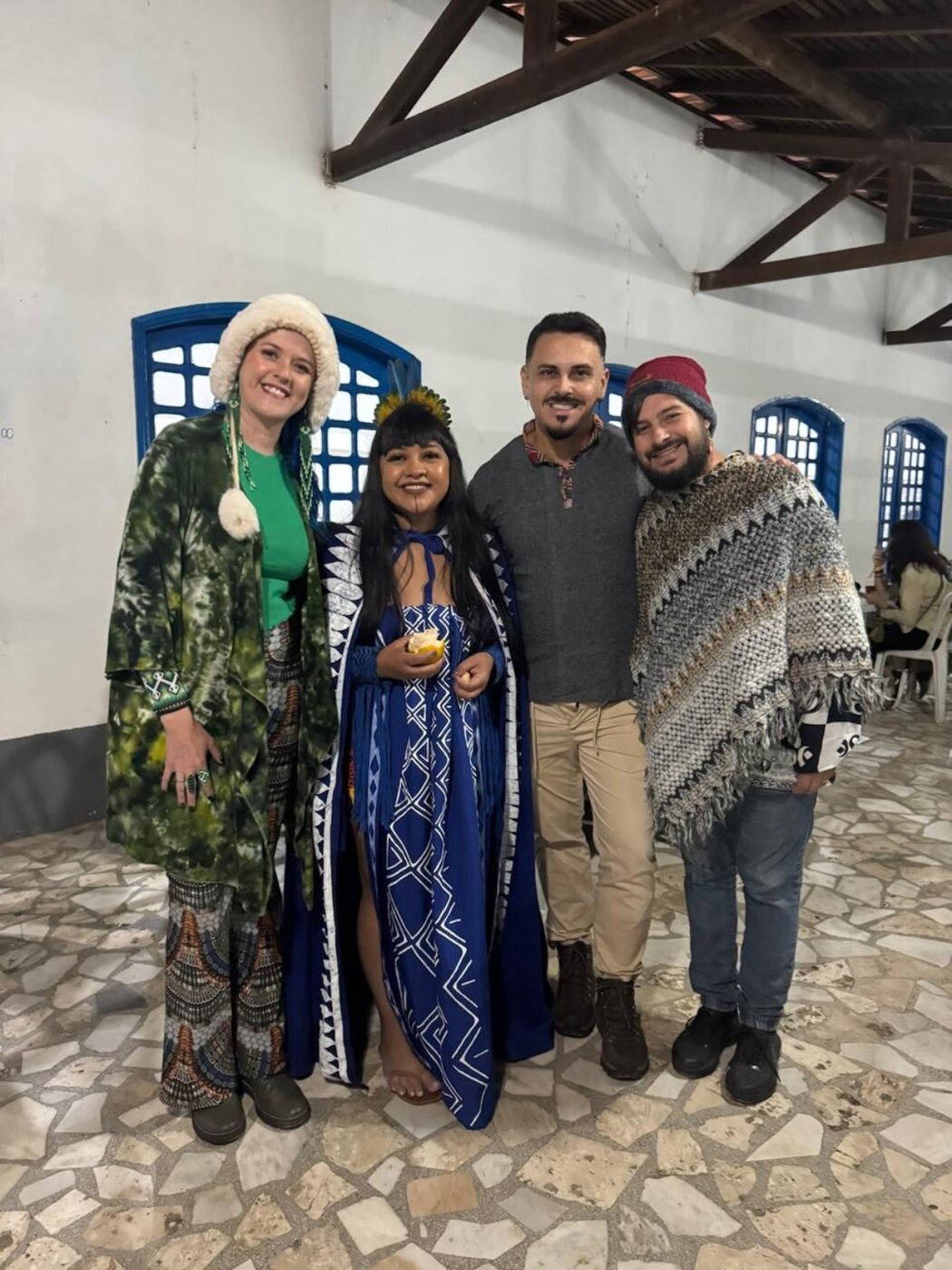
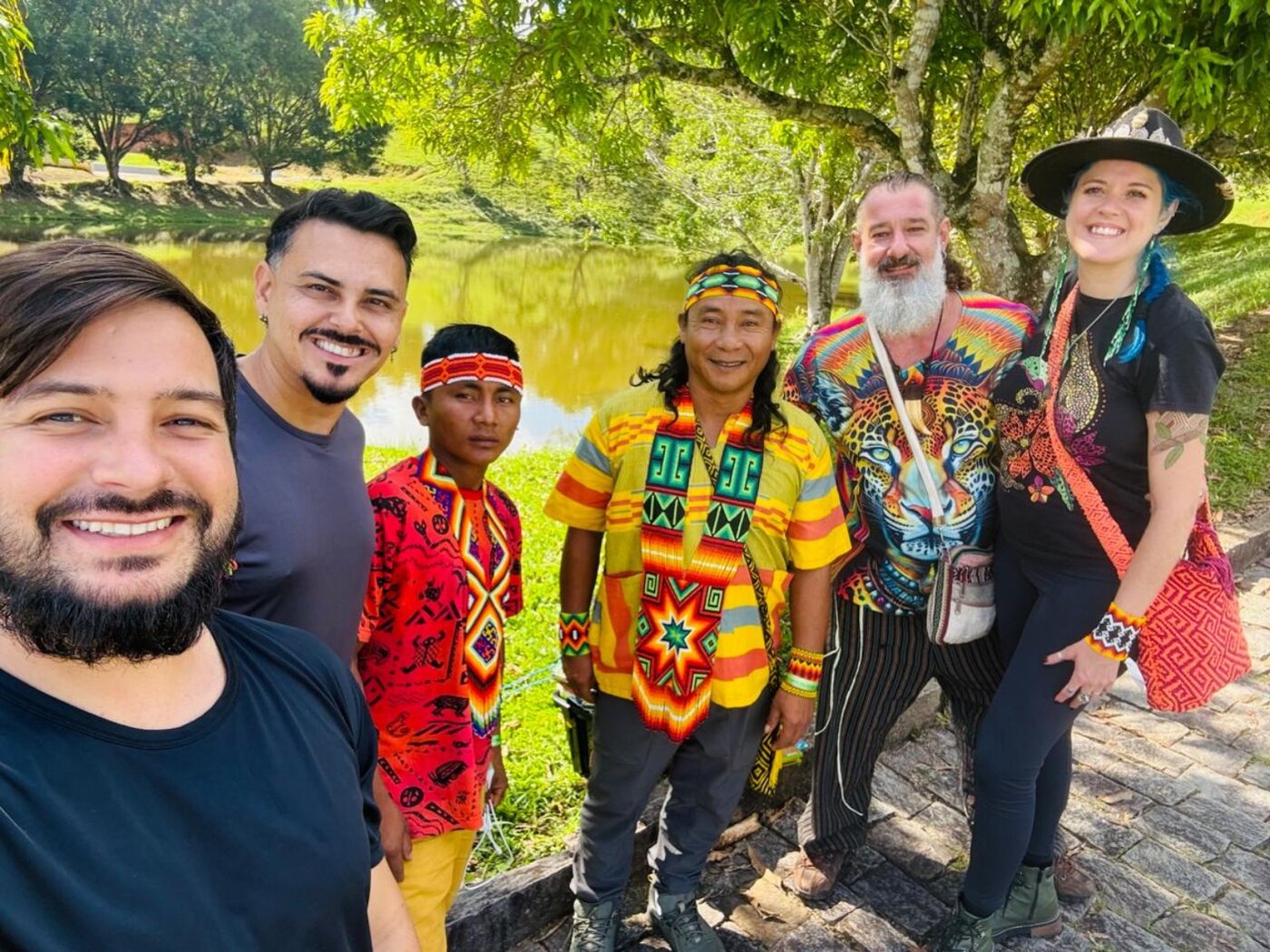
Between late 2024 and early 2025, directors Bruno Luz and Michael Pereira travelled to Aldeia Chico Curumim, in the Kaxinawá Indigenous Territory of the Jordão River, Acre, near the border with Peru. The community and chief Tamani welcomed them, and they took part in a community experience and a Huni Kuin baptism alongside young people from the village.
The experience included song, dance, a specific diet and a period of residence following local guidance. It has biographical and spiritual meaning for the directors, but does not grant the Sanctuary lineage, institutional representation or permission to reproduce Huni Kuin rites.
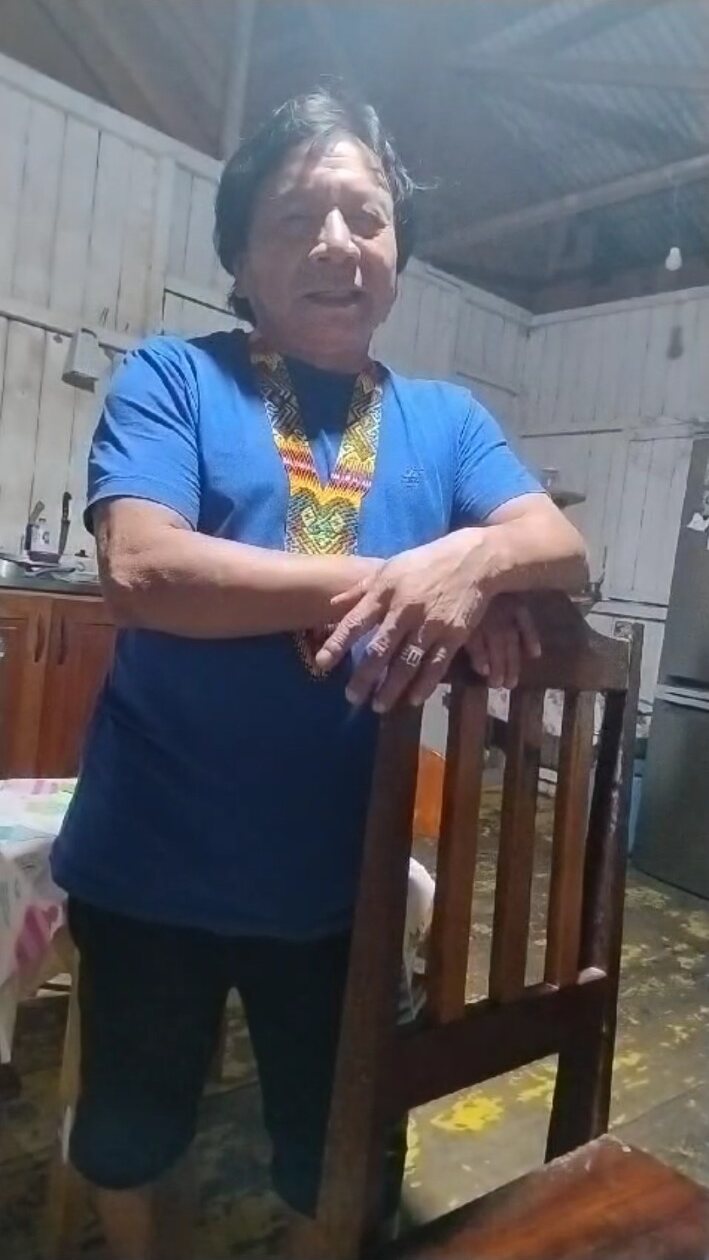
As the directors learned during their visit, the village is named after Chico Curumim, grandfather of Ibã Huni Kuin. Maru Huni Kuin, recorded singing at the foot of a samaúma tree, is the son of chief Tamani and grandson of Ibã.
Memory, language and song
Ibã Huni Kuin and the transmission of huni meka
Ibã Huni Kuin, also known as Isaías Sales, is an educator, researcher and txana, a master of his people’s songs. His work includes Indigenous education and the transmission and documentation of huni meka, songs connected to nixi pae in the Hãtxa Kuin language.
An authorized audiovisual record made at Aldeia Chico Curumim preserves Ibã singing ancestral prayers in their original form, without translation or written reproduction. The record acknowledges Huni Kuin authorship; it does not transfer authority over these songs to the Sanctuary.
Brazilian ayahuasca history
Alto Santo and the memory of Mestre Irineu
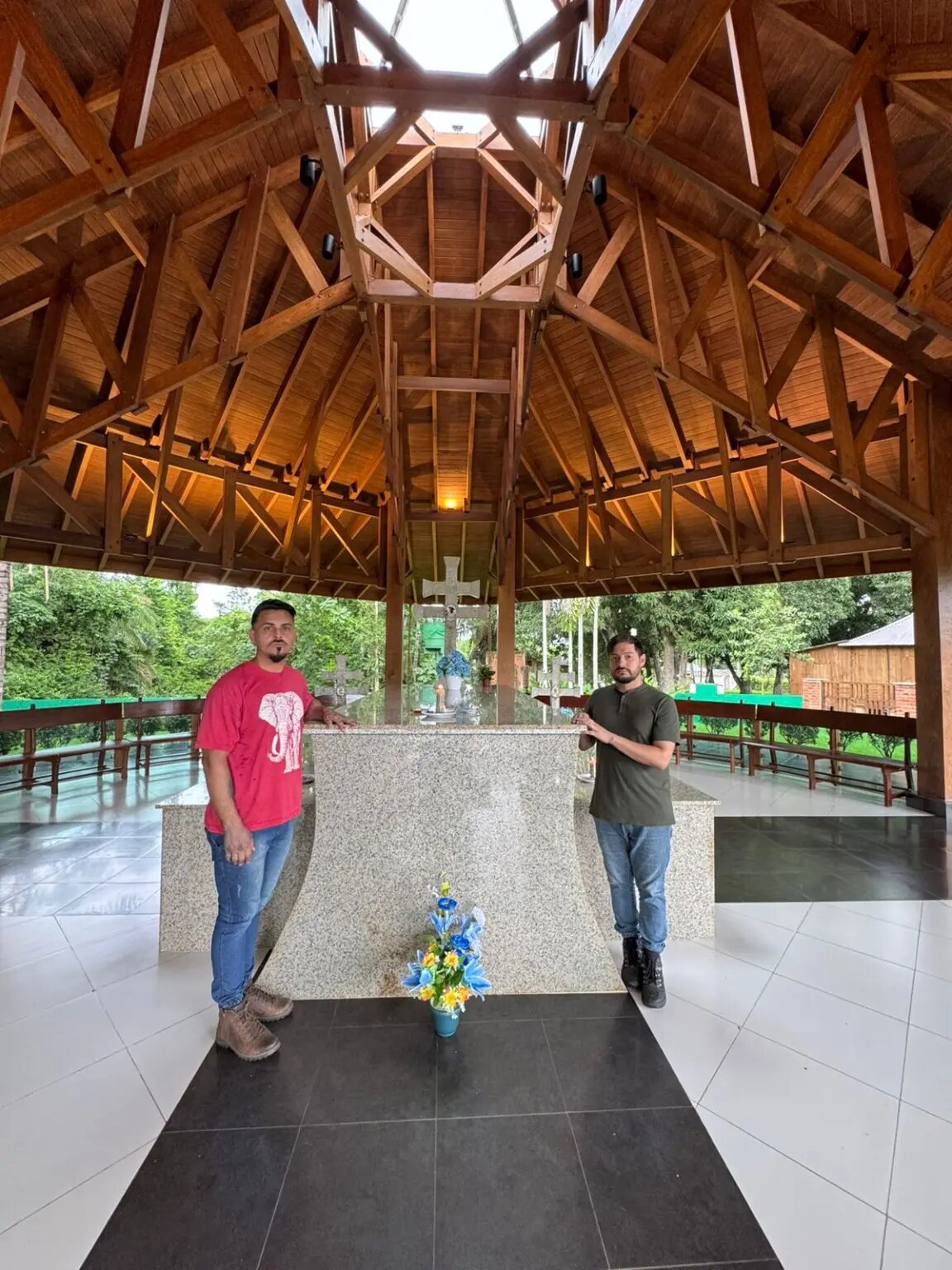
During the same period, Bruno Luz and Michael Pereira visited Alto Santo in Rio Branco and paid tribute at the grave of Mestre Raimundo Irineu Serra, a central historical figure in Brazilian ayahuasca religions.
The instruction not to photograph Alto Santo was fully respected. The visit was an act of historical learning and reverence and does not establish affiliation between the Sanctuary and Santo Daime or the Centro de Iluminação Cristã Luz Universal.
Encounters at the temple
Indigenous authorship and continuing relationships
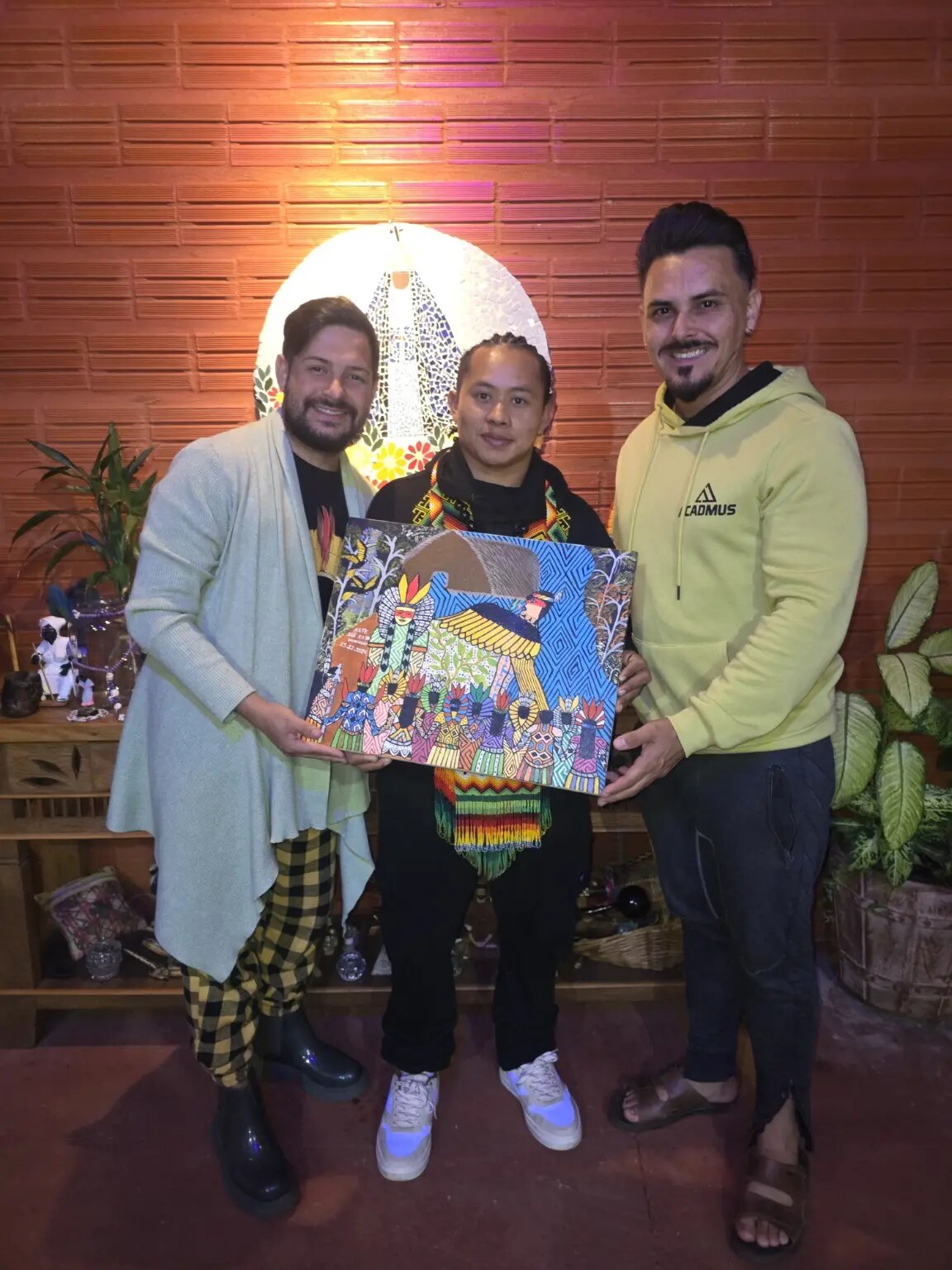
The Sanctuary has received Indigenous visitors and delegations in encounters at the temple, including Huni Kuin visitors in 2025 and a Yawanawá delegation in 2026. Each presence is approached as an opportunity for listening and recognition of Indigenous authorship.
In 2025, Siã Kaia, a Huni Kuin artist from Aldeia Chico Curumim, visited the Sanctuary. One of his works is displayed at the temple with attribution to the artist as a memory of this encounter, not as a symbol of institutional representation of the Huni Kuin people.
Festival Indígena União dos Povos
Three days of listening at FIUP 2025
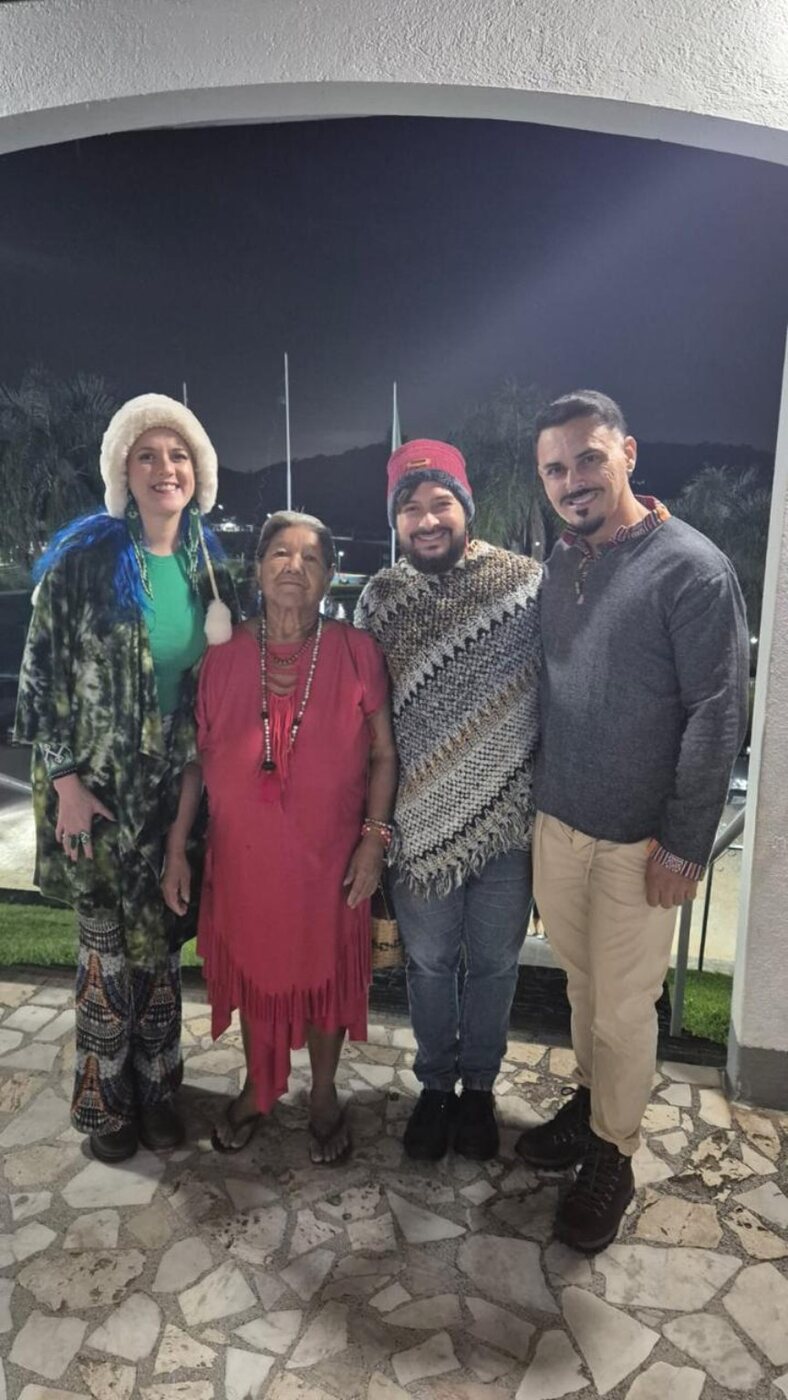
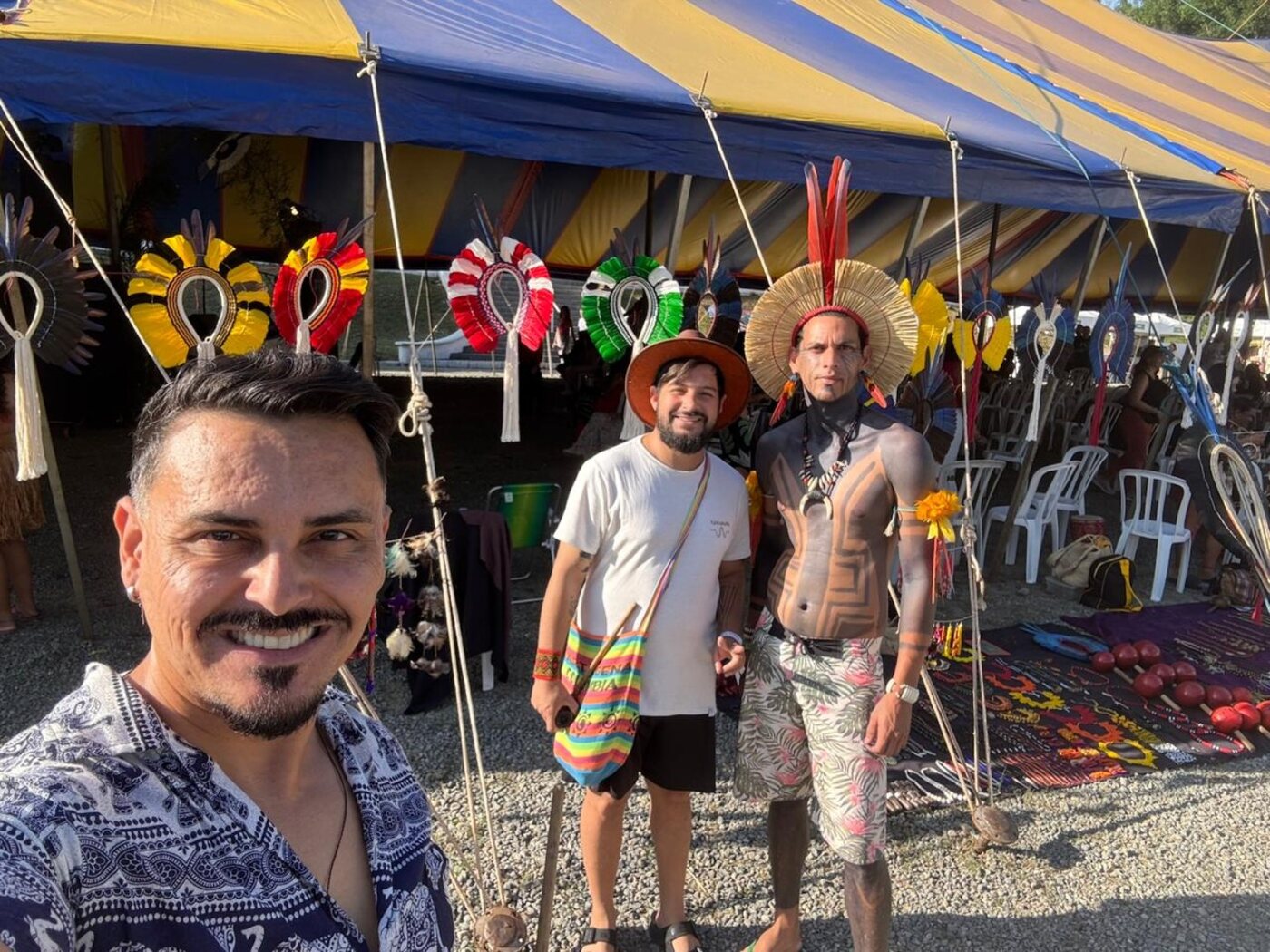
The directors attended all three days of FIUP 2025 in Arujá, São Paulo. They saw representatives of at least seventeen ethnic groups come together for performances, conversations and cultural exchange.
Their presence was that of attendees and learners, without any role in organizing or representing the festival or its participants.
Institutional identity
An independent ritual practice that respects difference
Santuário Céu de Aparecida has its own universalist shamanic ritual formation. It has no formal relationship with Santo Daime, União do Vegetal, the Huni Kuin people or another Indigenous people or ayahuasca religion.
Personal experience and institutional contact do not equal affiliation, authorization, lineage or representation. Respect includes naming sources, recognizing living cultures and being clear about what the Sanctuary may not claim or reproduce.
Institutional term
Ayahuasca is the term used in the Sanctuary’s documents and communications.
Cultural diversity
Other names are presented with context, attribution and respect for their origins.
Limit of representation
Encounter and learning never become authority to speak for another people.
Essential information
Does the Sanctuary represent the Huni Kuin people?
No. The experience of Bruno Luz and Michael Pereira at Aldeia Chico Curumim is part of their personal and institutional history, but creates no representation, lineage or authority to speak on behalf of the Huni Kuin people or reproduce their rites.
Is the Sanctuary affiliated with Santo Daime or União do Vegetal?
No. The Sanctuary has its own ritual formation and no formal relationship with these religions. Their historical importance is acknowledged without claiming affiliation.
Are the photographs authorized?
Yes. The records published on this page were authorized. Captions identify people and contexts whenever that information is available and relevant.
Institutional content prepared by Santuário Céu de Aparecida and reviewed by Michael Luis Miguel Pereira e Bruno Lucas de Paula Luz · Updated September 1, 2026.
Sources and limits of this content
Sources
- Festival Indígena União dos Povos — FIUP
- Museu Goeldi — Ibã Huni Kuin and MAHKU
- IPHAN — Huni Meka: chants of Nixi Pae
- Government of Acre — Aldeia Chico Curumim and Alto Rio Jordão
- Authorized records and institutional account by directors Bruno Luz and Michael Pereira